18+ only. Crypto gambling involves risk - never wager more than you can afford to lose. Some links may be affiliate links; rankings stay independent. Gamble responsibly.
A long-running dice site that documents native ZEC play - but the Anjouan license number claimed in its own terms does not appear in the official register (checked 2026-10-24). Watch-grade: small deposits only, test withdrawal first.
Risk-based KYCZEC nativeProvably fair
Progressive jackpot bonus, sniper race, reload offers and occasional no-deposit campaignsVaries per promotion; 1x wagering of eve…
Lists Zcash in its official coin list - but the 1xBet-network track record (confiscation patterns, Byline Times reporting) keeps it off any recommendation list. Test with tiny amounts only.
Selective KYCZEC listed
Up to 7 BTC across 4 depositsHigh rollover, strict terms
ZEC slots lobbies look interchangeable because they license the same studios. The differences that matter are invisible in the lobby grid:
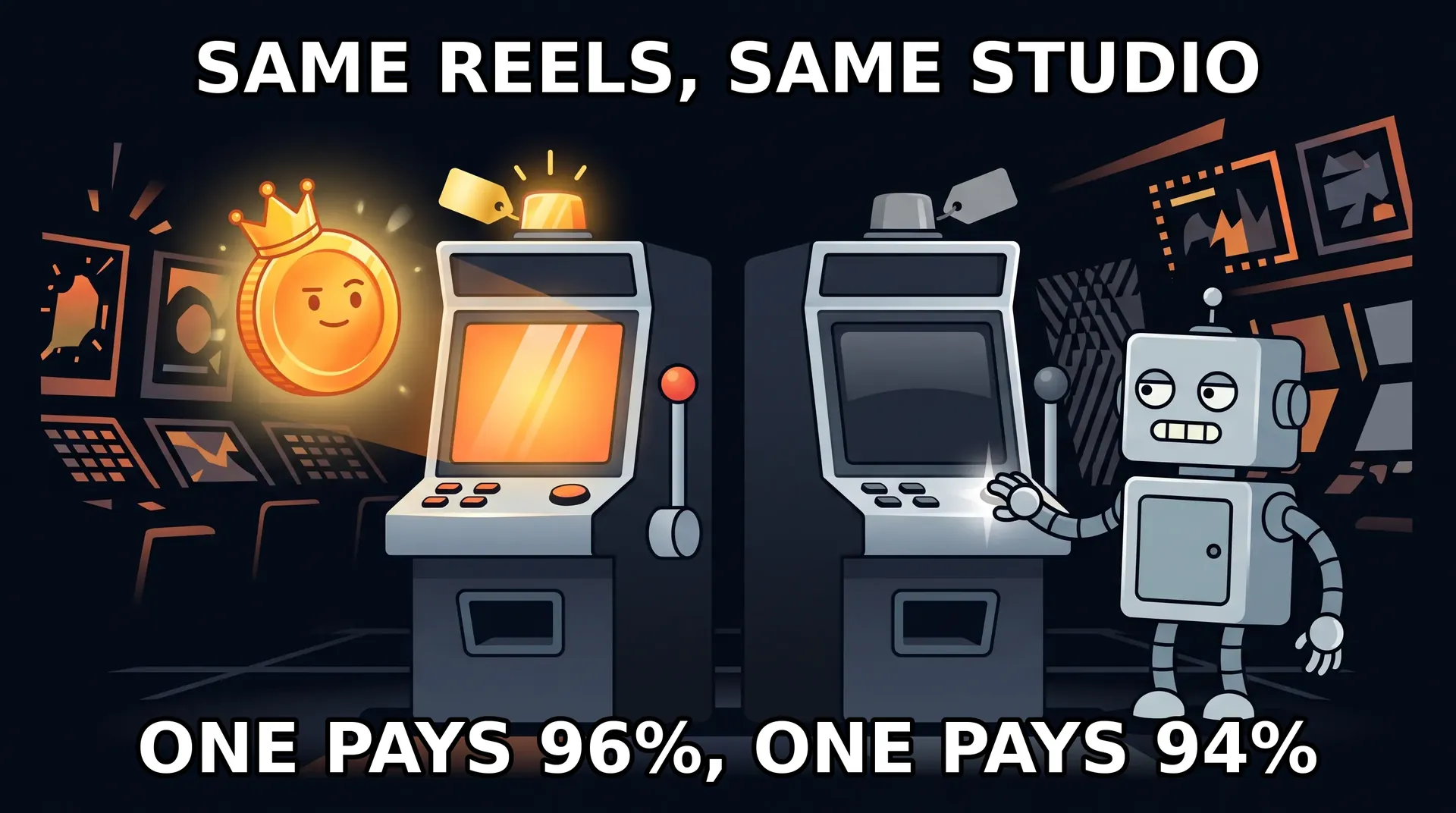
Which RTP build the operator hosts. Studios ship multiple configurations of the same title; a 2-point RTP gap is a 2x edge difference. The best operators state per-game RTP (Pragmatic Play publishes 96.50% for Gates of Olympus [2]); the worst host the reduced build and hope nobody reads.
Contribution tables. Slots almost always contribute 100% toward bonus wagering while tables contribute 5-10% - the BitStarz terms are the canonical published example of the pattern [3]. That makes slots the default bonus-clearing game, which is exactly why bonus math and slots math are the same conversation.
Payout rails. Same lobby, different plumbing: ZEC deposits confirm in ~75-second blocks, and the payout path (transparent vs shielded) is decided by the operator, not the game.
The RTP ladder: what each percentage point costs per 1,000 spins - and where bonus wagering math sits
The per-spin tax, in ZEC terms
At 1 ZEC spins, the difference between a 97% and a 94% RTP is 0.03 ZEC per spin - 3 ZEC per 100 spins, 300 ZEC per 10,000. Over a casual month of play, lobby choice costs more than every deposit fee combined. The mechanics:
Edge per spin: 100% - RTP. A 96% build carries a 4% edge - roughly 4x a fair dice table's.
Volatility does not change EV, only variance: high-volatility games concentrate the 4% into fewer, larger outcomes.
Wagering requirement interaction: a 40x bonus at slots-only contribution means 40x the bonus in spins, each paying the house 4-6%. The bonus EV is computed exactly in our wagering calculator - usually the "gift" is worth less than the spins it forces.
Two identical slot machines side by side, price tags 96.5% RTP vs 94% RTP, a robot picking the shiniest one.
Reading a ZEC slots lobby in five minutes
Filter to named studios. Pragmatic, Hacksaw, Nolimit City, Push - studios that publish RTP. "1300 slots" of unnamed games is filler with the RTP hidden.
Open one game's info panel. If the RTP is displayed (96.50% [2]), the operator hosts the standard build; if it is absent, expect the reduced one.
Check the bonus contribution table before claiming anything. The 100%/5% split [3] means a bonus turns your slots session into a wagering contract - model it in the wagering calculator first.
Set the loss unit before the reels spin. At 4-6% per-spin edge, 100 spins of 0.01 ZEC costs an expected ~0.05 ZEC. Slots are the most expensive ZEC game per minute by design.
Check the payout path separately. Slots do not care, but your privacy does - the shielded payouts hub explains why the withdrawal address type outranks the game lobby.
What the tracked lobbies look like
The 3 operators here split between full-casino lobbies (Cloudbet, 1xBit - thousands of slots, bonus programs attached) and originals-plus-slots hybrids (DuckDice). None of the tracked sites publishes per-game RTP lists, which is itself a data point: the industry standard is provider-certified fairness with operator opacity. The [5,000+] figure in the stat strip is the largest documented lobby in the set; treat unstated counts as the smaller ones they are.
The honest frame for ZEC slots: you are trading the best-in-class privacy rails of the deposit chain for the standard 4-6% per-spin tax of the genre. Slots are the most expensive way to use ZEC and the least verifiable game category on the site - dice and originals win both comparisons, and the RTP checker is there for any specific game you intend to grind.
96%+ for the games you actually play. Major studios publish per-game RTP (Gates of Olympus: 96.50%); a lobby that averages 94% and hides per-game numbers is selling a 6% per-spin tax. The number is set in the game software - the casino cannot change it, but it can choose which versions to host.
Do ZEC slots pay differently from BTC slots?
No. The reels are identical - same provider build, same RTP, same volatility. The differences are the rails: deposits on ZEC confirm in ~75-second blocks, balances sit in ZEC units, and the casino's payout path (transparent vs shielded) matters more than the game lobby ever will.
Is a 100% match bonus with 40x wagering worth it on slots?
Usually not on its own terms. Slots contribute 100% to wagering, so a 100% bonus at 40x on (deposit+bonus) means 80x the deposit in play - at a 3-6% slots edge that is a expected cost of 2.4-4.8x the deposit before withdrawal. Compute it in the wagering calculator before opting in.
What does volatility mean for my session?
RTP is the long-run average; volatility is the shape. High-volatility slots pay rarely and large, low-volatility ones pay often and small - same RTP, different survival time. Flat small bets on high-volatility games end sessions early; that is a property, not a defect.
Can I check what a slot actually paid out?
Only via the provider's published RTP and certification, not by watching your session. A 10,000-spin personal sample says almost nothing - the confidence interval dwarfs the RTP difference. Judge lobbies by provider reputation and published numbers, not vibes.
Why do some casinos run "RTP-reduced" versions of famous slots?
Providers ship multiple RTP configurations (e.g. 96.5% and 94.5% builds of the same game) and operators choose. The game title stays the same; the price changes. If a casino does not state which build it hosts, assume the cheaper one.